Overview
This is a strategy I created for a client to map out potential voice AI use cases for a mobile app used in vet clinics.
The target audience was vet clinicians, vet techs, pet owners, and receptionists.
Role: Voice AI designer (I was a consultant for this project, brought in specifically to map out the voice strategy)
Partners: UX researchers, product designers, product strategists, leadership
Tools: FigJam
Goals
There were 5 main goals:
- Increase adoption of the app
- Increase the number of patients seen per doctor during a clinic shift
- Decrease the delay between exam completion and medical record completion for clinical visits
- Decrease the average appointment time
- Increase user satisfaction
Approach
With the goals in mind, I started digging through the existing UX research done by the team.
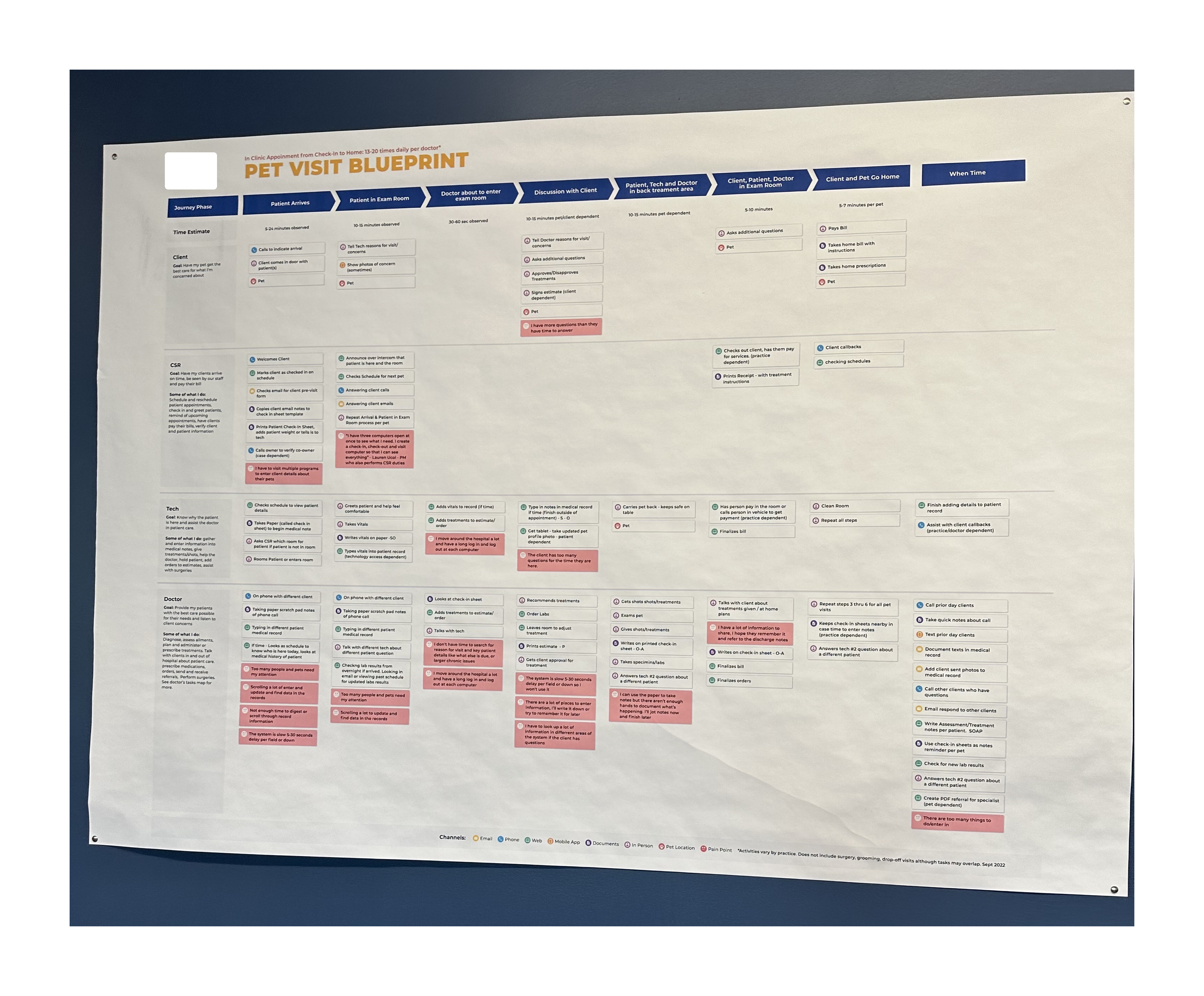
They mapped a pet visit blueprint for each of the target audiences (vet clinicians, vet techs, pet owners, and customer service representatives) with a comprehensive timeline of the user journey, starting from the patient's arrival to the tasks needed to get done after the appointment.
This included direct quotes and pain points from users, which was very helpful.
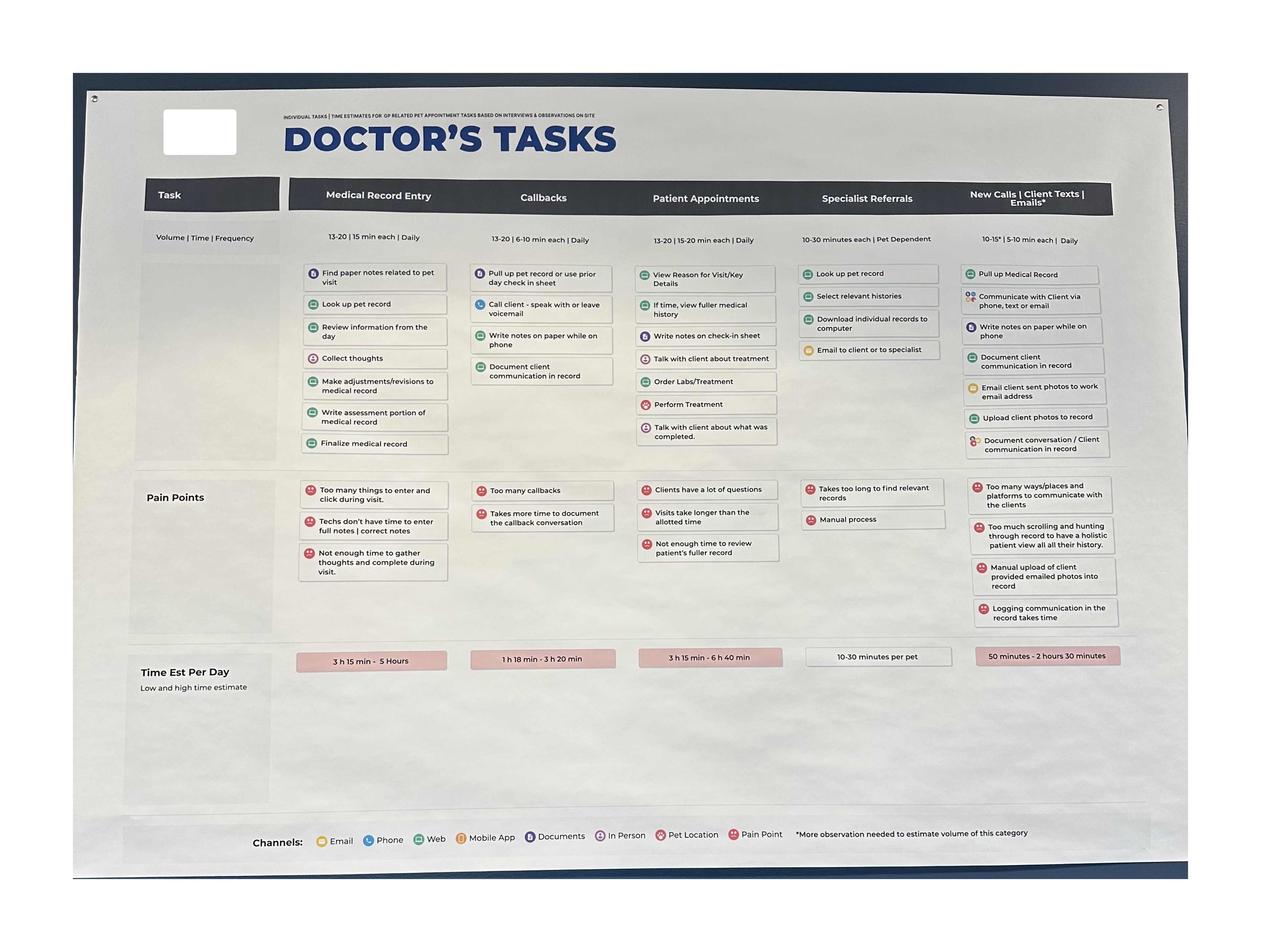
They also mapped out the vet clinician’s specific tasks and how long it took to do each task. This really highlighted a major opportunity for voice.
If you want a closer look at the pet visit blueprint and tasks, here’s the direct link to the Figma section.
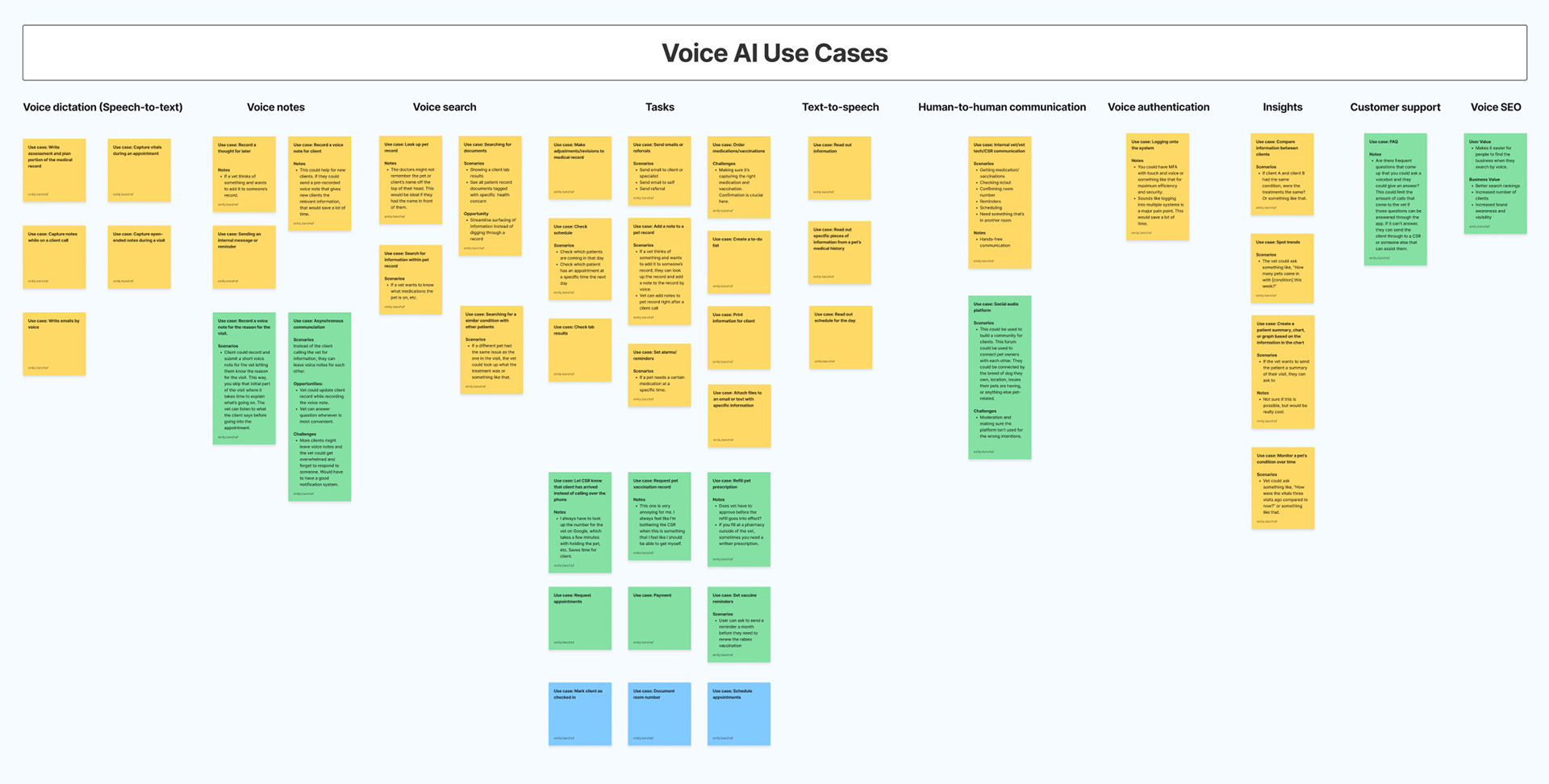
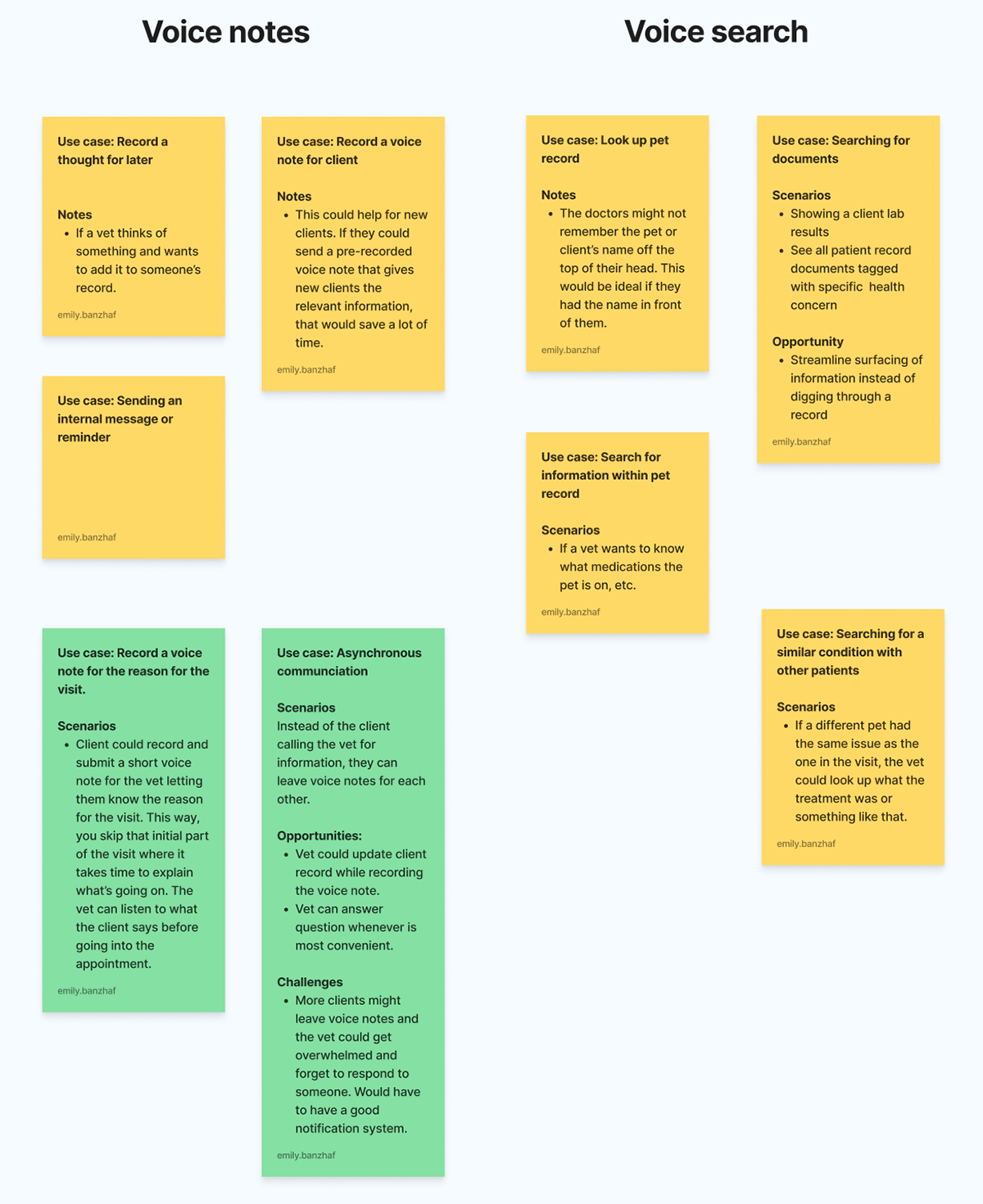
After studying the pain points, I wrote out, color-coded, and organized high-level potential use cases for each pain point, focusing on where voice would improve the experience.
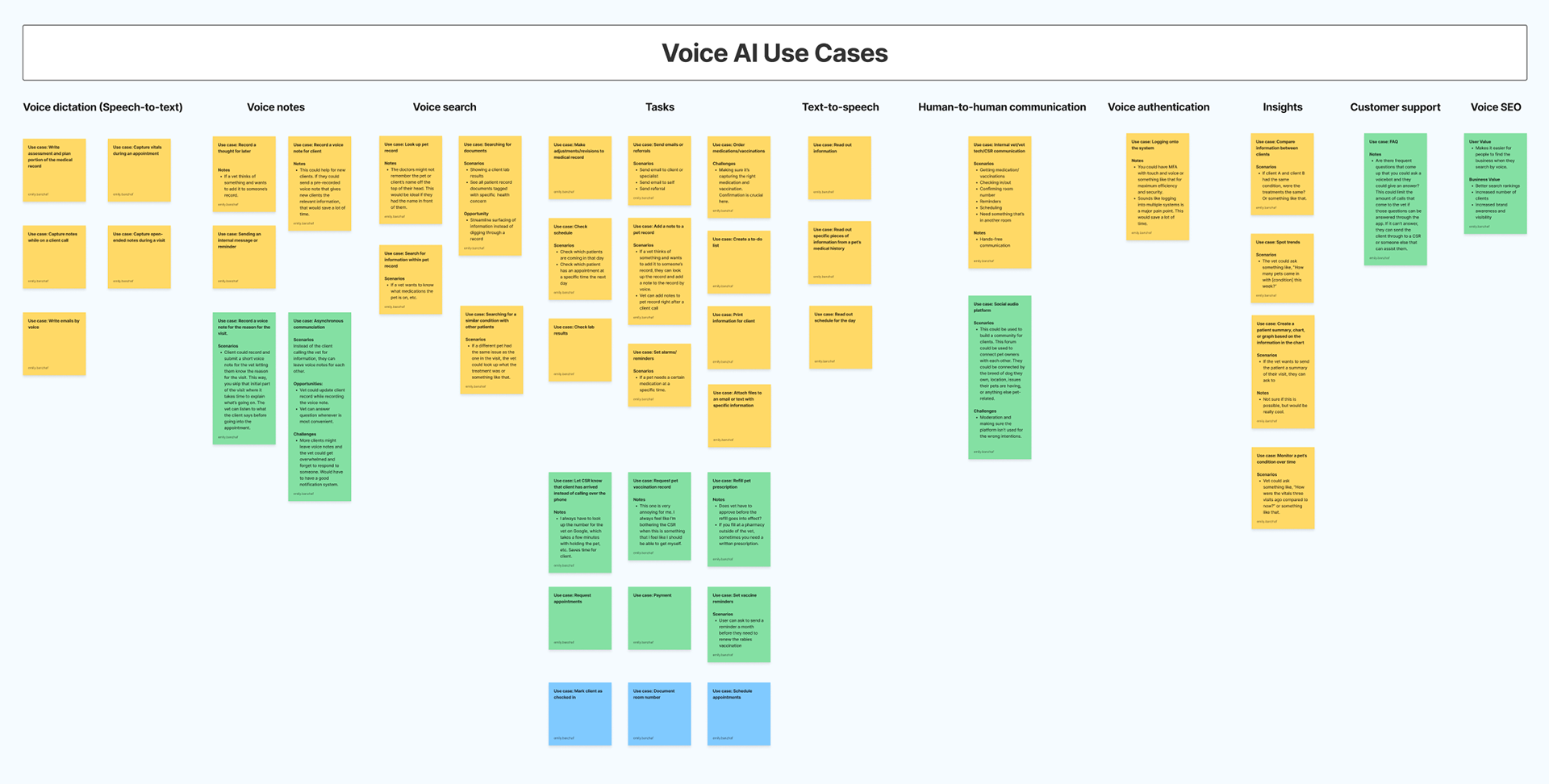
I included more traditional use cases like voice dictation, voice notes, voice search, tasks, text-to-speech, and a few others.
But I also wanted to think outside of the box and added a few that may not be considered as traditional, such as voice authentication, a social audio platform, and voice SEO.
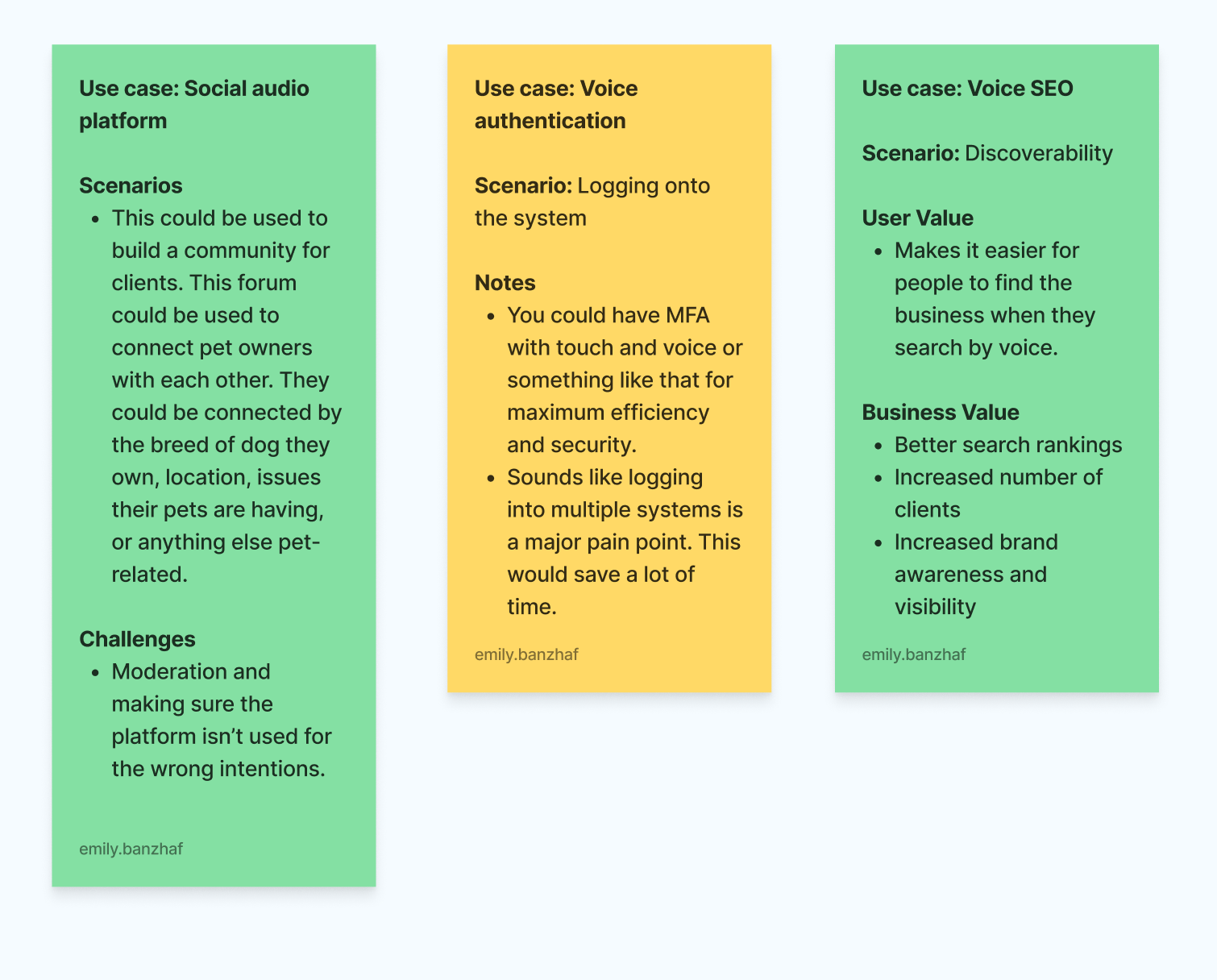
With each use case, I included sections for scenarios if there were multiple, opportunities, challenges, and additional notes.
Here are a few examples:
If you want to take a closer look at all the use cases, here’s the direct link to the Figma section.
I presented the use cases to the team at this point because I wanted to make sure I was on the right track. They gave me the go ahead to continue building them out.
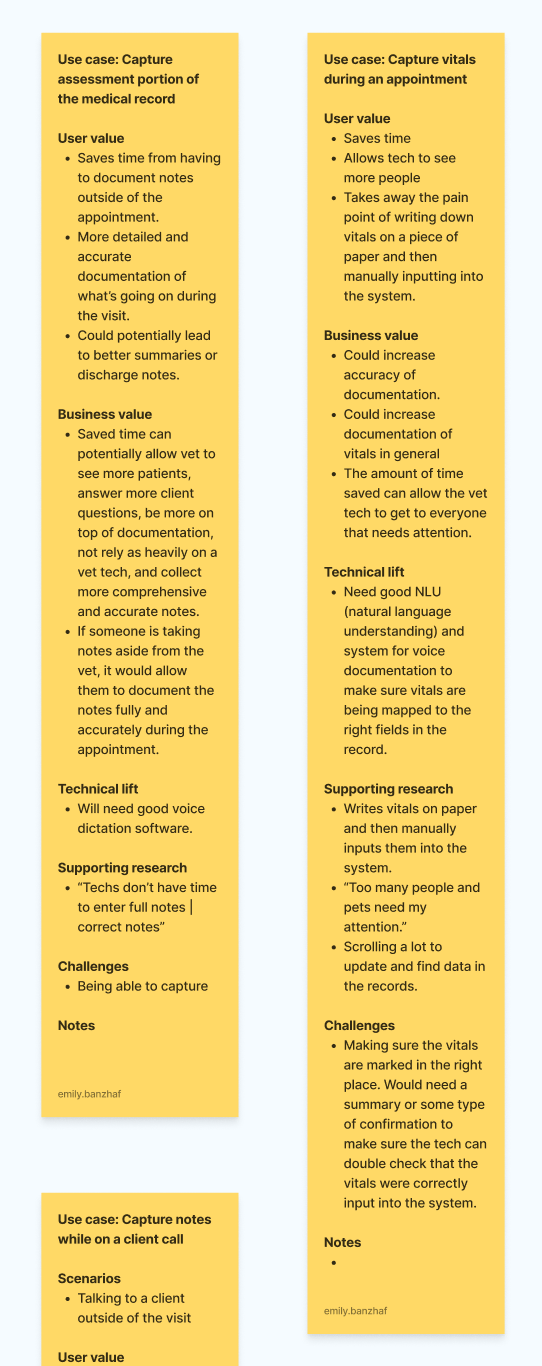
So I went through each use case and added in more details including the user value, business value, technical lift, supporting research, and any additional notes.
I did this to justify the investment in each of the use cases and give the client the opportunity to make an informed decision about which ones to move forward with.
Here are two examples:
If you want to check out all the use cases, here’s the link to the Figma board.
Outcome
Unfortunately, I was not on the project long enough to find out if they actually did move forward with any of these, but mapping out the use cases and categories was very helpful and I’ve been able to use these for other voice AI strategy projects since.